
How to Find Your Perfect Foundation Shade and Undertone
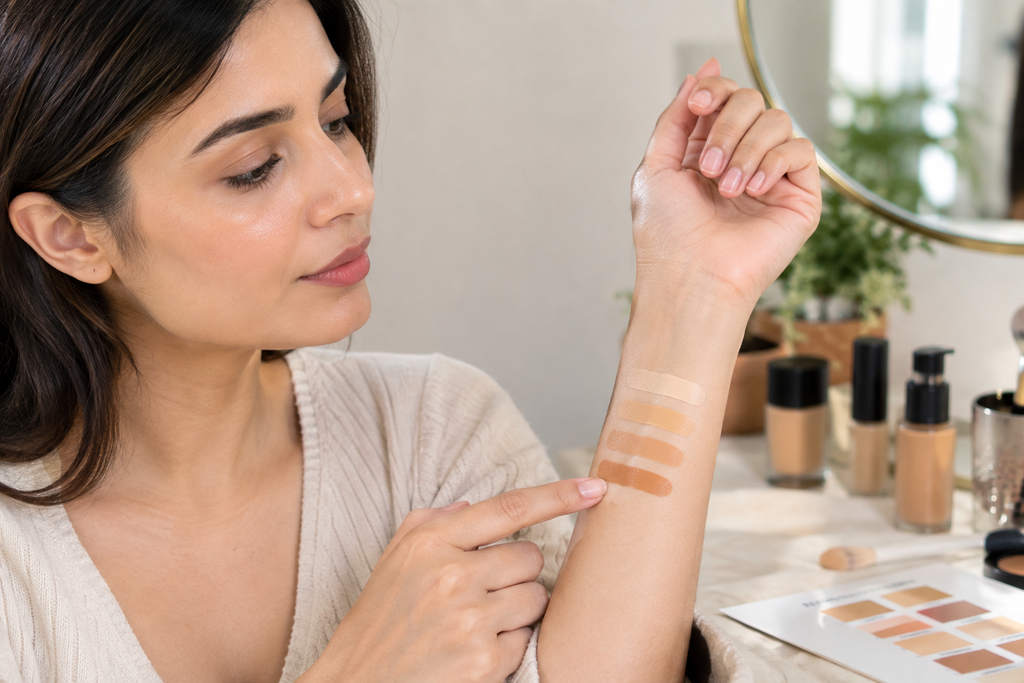
You’ve probably had it happen: a foundation looked perfect in the store, then turned orange, ashy, or patchy the second you got it home. Shade matching is one of the most frustrating parts of a makeup routine, and most people get it wrong not because they picked a bad product, but because they skipped a step, either they didn’t test their undertone properly, or their skin’s texture was working against them before the foundation even went on.
This guide covers how to find your perfect foundation shade and undertone, plus what to do when bumpy or textured skin is the real reason your base never looks smooth, no matter how well matched the colour is. And if you’d rather skip the trial and error altogether, a professional makeup application with expert colour matching takes the guesswork out completely.
Shade vs Undertone: Know the Difference
These two terms get used interchangeably, but they’re not the same thing.
- Shade refers to how light or dark your skin is.
- Undertone refers to the underlying hue beneath the surface; warm, cool, or neutral and it stays consistent regardless of how tanned or pale you are.
You can be a fair shade with a warm undertone, or a deep shade with a cool undertone. Getting the shade right but the undertone wrong is exactly why foundation can look “close but off”, too pink, too yellow, too grey.
How to Find Your Undertone
There are a few reliable ways to figure out your undertone without needing a professional colour analysis:
Check your veins. Look at the veins on the inside of your wrist in natural light. Blue or purple veins usually indicate a cool undertone. Green veins suggest a warm undertone. If you genuinely can’t tell, or they look blue-green, you likely have a neutral undertone.
Consider how you tan. Skin that burns easily and rarely tans tends to lean cool. Skin that tans easily and rarely burns tends to lean warm. Skin that does a bit of both usually sits in the neutral range.
Look at your jewellery preference. This isn’t foolproof, but it’s a useful clue, if silver jewellery tends to suit you better than gold, you likely lean cool. If gold looks better against your skin, you likely lean warm. If both look fine, you’re probably neutral.
Think about your eye and hair colour. Warm undertones often pair with hazel, brown, or amber eyes and golden or red-toned hair. Cool undertones often pair with blue, grey, or dark brown eyes and ash-toned hair. This isn’t a hard rule, but it can support the other tests.
Once you know your undertone, shade names on foundation bottles start making a lot more sense. Look for “warm,” “golden,” or “honey” tones if you lean warm, and “cool,” “porcelain,” or “rose” tones if you lean cool. Neutral undertones have the most flexibility and can usually wear either category depending on the brand.
Finding the Right Shade
Once undertone is sorted, shade matching comes down to testing properly rather than guessing from a bottle.
- Test on your jawline, not your hand. The skin on your hand is often a different tone to your face and neck. Swatching along the jaw shows you how the foundation blends into your natural skin tone at the point where face meets neck.
- Check it in natural light. Store lighting and phone cameras distort colour. Step outside or near a window before deciding.
- Let it sit for a few minutes. Many foundations oxidise slightly after application, meaning the shade can shift a touch darker or warmer once it’s had time to settle into the skin.
- Test two to three shades side by side. Rather than trying to guess the single “right” one, apply a few close options in stripes and see which disappears into your skin most seamlessly.
If you’re consistently between two shades, going for the lighter one is usually the safer bet, it’s far easier to warm up a foundation with bronzer than to lighten one that’s too dark.
Why Texture Ruins Even a Perfect Shade Match
Here’s the part that catches a lot of people out: you can have the exact right shade and undertone and still end up with foundation that looks patchy, cakey, or uneven because the problem isn’t the colour at all. It’s the texture underneath.
Bumpy or textured skin, whether from clogged pores, dry patches, congestion, or fine surface irregularities, creates shadows and unevenness that foundation can’t hide. In fact, foundation often makes texture more obvious, not less, because it settles into every bump and crease and catches the light differently across the uneven surface. This is especially noticeable with matte or full-coverage formulas, which tend to sit on top of the skin rather than blending into it.
If your foundation always looks “off” no matter how carefully you shade-match, textured skin underneath is very often the real culprit.
How to Fix Textured, Bumpy Skin (Without Making It Worse)
When skin feels rough or looks bumpy, the instinct is often to reach for a harsh physical scrub and buff it away. This is one of the most common and most damaging mistakes people make. Aggressive at-home exfoliation, especially with gritty scrubs used too frequently, can create micro-tears in the skin barrier, trigger inflammation, and actually worsen texture over time rather than smoothing it. It can also leave skin more reactive, more prone to breakouts, and more resistant to the very products meant to help it.
A gentler, more strategic approach works far better:
- Use chemical exfoliants sparingly, such as low-percentage AHAs or BHAs, rather than daily physical scrubbing.
- Keep skin consistently hydrated. Dehydrated skin often looks more textured, since dry, flaky patches catch light unevenly.
- Don’t over-exfoliate. Two to three times a week is usually plenty; daily scrubbing strips the skin’s natural barrier and creates more problems than it solves.
- Introduce retinoids slowly, if appropriate for your skin, as they support cell turnover without the physical abrasion of scrubbing.
That said, at-home care has limits. Deeper congestion, textured scarring, or stubborn bumpiness usually needs more than a drugstore scrub to actually shift and this is where professional treatment becomes the faster, safer option rather than a luxury.
Treatments like dermal peels and hydra facials are designed to exfoliate and resurface the skin at a controlled, professional level, lifting away dead skin cells, unclogging pores, and encouraging smoother texture without the trauma that comes from aggressive at-home scrubbing. A professional facial or skin treatment can address textured, bumpy skin far more effectively and with far less risk than repeatedly scrubbing at it yourself, and the results tend to show up faster too.
Prepping Skin Before Foundation Application
Once texture is under control, a few final prep steps help foundation apply more smoothly regardless of shade:
- Moisturise and let it fully absorb before applying primer or foundation.
- Use a smoothing or pore-filling primer over textured areas to create a more even surface.
- Apply foundation with a damp sponge rather than a dry brush, which can drag and highlight texture rather than blending over it.
- Build coverage in thin layers instead of applying a thick layer all at once, this looks far more natural and doesn’t sit as heavily in textured areas.
Quick Recap
- Undertone (warm, cool, neutral) stays constant; shade (light to dark) is separate
- Test undertone using veins, tanning tendency, and jewellery preference
- Always swatch foundation on the jawline in natural light, not on your hand indoors
- Textured or bumpy skin is often the real reason foundation looks uneven, not the shade
- Avoid aggressive at-home scrubbing, which can worsen texture over time
- Gentle chemical exfoliation and hydration help, but professional treatments resolve texture faster and more safely
- Prime, hydrate, and apply foundation in thin layers for the smoothest finish
When to Bring in the Professionals
If you’ve shade-matched carefully, prepped your skin well, and foundation still isn’t sitting right, it’s worth stepping back from more DIY fixes and getting expert input instead. A skilled makeup artist can identify your undertone accurately in minutes and match a shade that blends seamlessly, something that’s genuinely difficult to nail alone under bathroom lighting. And if texture is the underlying issue, a course of professional exfoliation or facial treatments will get your skin to a smoother, more even base far faster than continuing to scrub away at home, with none of the irritation or barrier damage that comes with over-exfoliating yourself.
Getting both the skin and the shade right isn’t just about looking good in the mirror, it’s about a foundation that photographs well, wears evenly through the day, and doesn’t need constant fixing. Sometimes the fastest route to that isn’t another product, but a bit of professional help.